

Introduction: The Agony of the Hard Problem
Let me tell you about a feeling. It’s the 3 AM, staring-at-the-ceiling, a-cold-knot-of-deep-and-profound-bewilderment-in-your-stomach kind of feeling. You are thinking about your own mind. You are trying to understand the simple, and yet completely impossible, fact of your own existence. How is it that a collection of wet, electrochemical reactions inside the dark, silent prison of your skull can produce the vibrant, colorful, and deeply personal experience of being you? How does the brain, a three-pound lump of fatty tissue, create the subjective experience of the color red, the feeling of sadness, the taste of a strawberry?
This is what the philosophers call the “Hard Problem of Consciousness.” And if you have ever truly, deeply thought about it, it is a question that can drive you mad. I have been there. I have lived in that quiet, desperate state of philosophical vertigo for years. I have read the spiritual texts, the philosophical treatises, the new-age books. And they are full of beautiful, comforting, and ultimately unsatisfying answers. They talk about souls, about spirits, about a universal consciousness. But they never, ever explain the how. They never bridge the vast, terrifying chasm between the physical world of neurons and the subjective, inner world of experience.
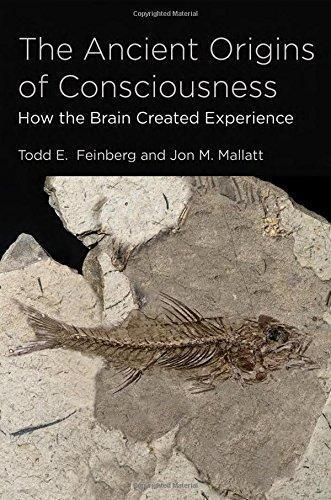
It was in that state of complete and utter frustration, of feeling like the most fundamental question of my own existence was a mystery that could never be solved, that I started looking for a different kind of answer. A more grounded, more rigorous, more scientific answer. And that’s what led me, with a massive dose of skepticism, to a book with a title that was a promise in itself: The Ancient Origins of Consciousness: How the Brain Created Experience.
This wasn’t just another philosophical treatise. This was a book that promised to tackle the Hard Problem from the perspective of neuroscience and evolutionary biology. It was a promise to trace the long, slow, and almost unimaginable journey of consciousness, from its most primitive beginnings in ancient organisms to the complex, self-aware, and often deeply neurotic form that it takes in human beings. It felt less like a book and more like an archaeological dig into the very foundations of the soul.
The Philosophy: Consciousness is Not a Mystery, It’s a Solution
I was cynical, of course. My brain is hardwired to be. The world of neuroscience is full of theories about consciousness, most of them dense, jargon-filled, and ultimately unconvincing. I needed to understand the philosophy behind this one. Was this just another clever but ultimately empty theory, or was it a different way of thinking about the problem entirely?
The core idea, as I came to to understand it, was a profound and deeply elegant paradigm shift. The philosophy of this book is that consciousness is not a weird, spooky, and inexplicable byproduct of a complex brain. It is not a ghost in the machine. Consciousness is a solution. It is a beautiful, elegant, and incredibly effective biological solution to a very specific and very ancient evolutionary problem: the problem of complex movement.
This was a gut punch. I had always thought of consciousness as a high-level, almost divine, human attribute. This book was telling me that its roots were far more humble, far more ancient, and far more practical. It was telling me that I had been looking in the wrong place, at the wrong end of the evolutionary tree.
The philosophy is that a deep, evolutionary understanding is the foundation of everything. The book doesn’t start with the complex, self-aware consciousness of human beings. It starts at the very beginning, hundreds of millions of years ago, with the simple organisms that first evolved the ability to move through their environment. And it asks a simple, powerful question: how does a brain learn to control a body that is moving in a complex, unpredictable world?
It’s about teaching you to think like an evolutionary neuroscientist. It’s about learning to see the different features of consciousness not as philosophical mysteries, but as practical, adaptive tools that were evolved to solve specific, real-world problems. The feeling of pain, the experience of hunger, the emotion of fear—these are not just abstract experiences; they are powerful, and deeply useful, biological signals that guide our behavior and keep us alive.
And it’s about making the subject accessible and engaging. The book is filled with clear, simple illustrations and analogies that connect the abstract, and often intimidating, concepts of neuroscience to the world you actually live in. It transforms the subject from a dry, academic chore into a living, breathing, and incredibly fascinating story of our own, deep, evolutionary past.
What’s Inside: A Guided Tour of the Evolution of a Soul
So what does this journey of understanding actually look like? The book is not just a collection of chapters; it is a carefully structured, and beautifully illustrated, guided tour of the entire, and often mind-bending, evolutionary history of the conscious mind.
The journey starts, as it should, with the absolute foundational principles. The early chapters are a masterclass in the fundamentals of what consciousness is, of what the Hard Problem really entails, and of why it has been so difficult to solve. But instead of just a dry recitation of the philosophical debates, you get a clear, simple, and powerful new framework for thinking about the problem.
Then, you move into the deep, and often deeply strange, waters of evolutionary history. You get a deep, but always accessible, dive into the world of the Cambrian explosion, the period over 500 million years ago when the first complex, mobile animals evolved. And you learn how the simple, practical problem of having to move through a dangerous world and to make decisions—do I eat this, do I run from that, do I mate with this?—was the evolutionary pressure cooker that gave birth to the first, most primitive forms of subjective experience.
The book is packed with detailed, real-world examples from the animal kingdom. You learn about the simple, reflexive consciousness of an insect, the more complex, emotional consciousness of a mammal, and the unique, self-aware, and story-telling consciousness of a human being. It is a visual and intellectual feast that makes the abstract concept of consciousness feel tangible, real, and, for the first time, understandable.
And it doesn’t shy away from the hard stuff. There are entire, beautifully explained chapters on the neural correlates of consciousness, on the specific brain structures that are involved in creating our subjective experience, on the role of the brainstem, of the cortex, of the thalamus. But at every step of the way, the focus remains the same: on a deep, conceptual, and evolutionary understanding of how and, more importantly, why the brain created the miracle of experience.
The Benefits: More Than Just a Scientific Education
So what are the real, tangible benefits of going on this deep, and often mind-bending, journey? It’s not just about getting a good grade in a philosophy or a neuroscience class. It is about a complete and total transformation of your understanding of yourself, of the world, and of your place in it.
The most obvious benefit is that you will finally have a plausible, and deeply satisfying, scientific answer to the Hard Problem of Consciousness. You will stop seeing your own mind as an inexplicable, supernatural mystery, and you will start to see it as a beautiful, and deeply understandable, product of hundreds of millions of years of evolution.
The second benefit is a massive increase in your critical thinking skills. The book’s relentless focus on a clear, logical, and evidence-based argument will train your brain to think in a way that is more clear, more powerful, and more effective.
The third benefit is a newfound sense of connection to the natural world. When you understand that the roots of your own consciousness are so ancient, that you share a common, experiential ancestry with every other animal on the planet, it becomes much harder to see yourself as separate from, and superior to, the rest of nature. You develop a new, and deeply profound, sense of awe and reverence for the entire web of life.
And the biggest benefit of all, for me, was a newfound sense of self-compassion. When you understand that so many of your own, often painful, subjective experiences—your fears, your anxieties, your desires—are not personal failings, but are ancient, and deeply ingrained, evolutionary survival programs, you can start to relate to yourself with a new level of kindness, of understanding, and of grace.
Who Is This For? The Curious Human
So who is this really for? After living with this book, after having my entire understanding of myself transformed by it, I can tell you exactly who needs to have this on their desk.
This is for the science enthusiast, the lifelong learner, the curious mind who is not satisfied with the old, dualistic, and ultimately unsatisfying answers to the big questions of life.
This is for the philosophy student, who has wrestled with the Hard Problem of Consciousness and who is looking for a new, powerful, and scientifically grounded perspective.
This is for the psychology or neuroscience student, who wants to move beyond just understanding the mechanics of the brain and to start understanding the deep, evolutionary origins of the mind.
And this is for the person who is on a spiritual journey, who is seeking a deeper understanding of themselves and their place in the cosmos, but who wants a path that is grounded in reason, in evidence, and in a deep respect for the natural world.
This is not for the person who is looking for a simple, easy, or dogmatic answer. This is for the person who is not afraid to think. This is for the person who is ready to have their mind, and their entire worldview, beautifully, and permanently, expanded.
Conclusion: The End of the Mystery
So here I am. The days of the 3 AM, soul-crushing, and deeply bewildering stare-down with the mystery of my own consciousness are a thing of the past. “The Ancient Origins of Consciousness” is more than just a book. It is a complete, A-to-Z, and battle-tested blueprint for understanding the very foundations of your own experience.
It is a declaration of independence from the tyranny of the old, and ultimately unsatisfying, philosophical and mystical explanations. With its clear, simple, and powerful scientific argument, its real-world examples, and its relentless focus on helping you to understand the why behind the what, it is, in my honest and battle-tested opinion, one of the single most important and game-changing books that any curious human being can ever read. If you are a student, a seeker, or just a human being, and you are tired of the confusion, the frustration, and the intimidation of the Hard Problem, then this is the answer you’ve been looking for.
Publisher: MIT Press
Language: en
ISBN-10: 0262034336
ISBN-13: 9780262034333
Page Count: 387
Categories: Medical
Description: How consciousness appeared much earlier in evolutionary history than is commonly assumed, and why all vertebrates and perhaps even some invertebrates are conscious. How is consciousness created? When did it first appear on Earth, and how did it evolve? What constitutes consciousness, and which animals can be said to be sentient? In this book, Todd Feinberg and Jon Mallatt draw on recent scientific findings to answer these questions—and to tackle the most fundamental question about the nature of consciousness: how does the material brain create subjective experience? After assembling a list of the biological and neurobiological features that seem responsible for consciousness, and considering the fossil record of evolution, Feinberg and Mallatt argue that consciousness appeared much earlier in evolutionary history than is commonly assumed. About 520 to 560 million years ago, they explain, the great “Cambrian explosion” of animal diversity produced the first complex brains, which were accompanied by the first appearance of consciousness; simple reflexive behaviors evolved into a unified inner world of subjective experiences. From this they deduce that all vertebrates are and have always been conscious—not just humans and other mammals, but also every fish, reptile, amphibian, and bird. Considering invertebrates, they find that arthropods (including insects and probably crustaceans) and cephalopods (including the octopus) meet many of the criteria for consciousness. The obvious and conventional wisdom–shattering implication is that consciousness evolved simultaneously but independently in the first vertebrates and possibly arthropods more than half a billion years ago. Combining evolutionary, neurobiological, and philosophical approaches allows Feinberg and Mallatt to offer an original solution to the “hard problem” of consciousness.
Related products


New Books


New Books




New Books